

Uncategorized
DMT vs 5 meo DMT
Abr
DMT vs 5 meo DMT—these two compounds represent the pinnacle of psychedelic intensity, yet they produce fundamentally different experiences. Both are naturally occurring tryptamines that have captured the attention of researchers, psychonauts, and mental health professionals alike. With increasing interest in psychedelic-assisted therapy, both substances are under the spotlight for their potential to treat depression, anxiety, PTSD, and addiction.
Even public figures like NFL MVP Aaron Rodgers have publicly shared their transformative experiences with DMT, fueling curiosity and further research. But what exactly are these substances, and how do they differ? This guide explores the key differences between DMT and 5-MeO-DMT—from their origins and chemistry to their effects, duration, safety profiles, and therapeutic potential.
If you are new to the world of tryptamines, we recommend starting with our foundational guide on what is DMT before diving into this comparison.
What Is DMT?
DMT (N,N-Dimethyltryptamine) is a naturally occurring tryptamine compound found in many plants and animals—including the human body, where it is produced in trace amounts. It is commonly known for its intense psychedelic experiences, often described as life-changing or spiritually profound.
Studies suggest that DMT may act as a neurotransmitter and play a role in regulating consciousness and dream states. In clinical settings, it has shown promise for the treatment of:
- Depressão
- Ansiedade
- Addiction
- Perturbação de Stress Pós-Traumático (PTSD)
For a deeper dive into its therapeutic uses, read our comprehensive article on DMT in mental health treatment.
DMT is often called “the spirit molecule” due to the profound entity encounters and visionary states it produces. When vaporized or smoked, it delivers one of the most intense and rapid psychedelic experiences known to science—complete with vivid geometric patterns, alien landscapes, and encounters with seemingly intelligent beings. For a full breakdown of what to expect, read our guide on how long does DMT last across different administration methods. DMT vs 5 meo DMT
What Is 5-MeO-DMT?
5-MeO-DMT (5-Methoxy-N,N-Dimethyltryptamine) is a less common psychedelic found in a few plant species and the venom of the Colorado River toad (Bufo alvarius). While related to DMT chemically, it produces a very different experience—one often described as ego-dissolving and transcendental rather than visual and visionary.
Survey data published in The Journal of Psychopharmacology reports that 79% of individuals with PTSD, 77% with depression, and 69% with anxiety reported significant symptom improvements following 5-MeO-DMT use. These statistics highlight why researchers are increasingly interested in this compound for therapeutic applications.
The 5-MeO-DMT experience is often described as a “whiteout” or “nondual awareness”—a state where the boundaries between self and the universe completely dissolve. Unlike DMT, which floods the mind with intricate visuals, 5-MeO-DMT tends to strip away all sensory complexity, leaving only pure consciousness, unity, and overwhelming awe.
DMT vs 5-MeO-DMT: 3 Core Differences
While both substances are structurally similar and hold immense therapeutic promise, their experiences and effects differ in significant ways. Here is a detailed breakdown of the three most critical distinctions:
1. Potency and Subjective Experience
This is where DMT vs 5 meo DMT diverge most dramatically.
DMT Experience:
- Intense, hyper-realistic visuals
- Vivid colors, geometric patterns, and fractals
- Entity encounters and “machine elves”
- Complex, multi-dimensional landscapes
- Highly visual and sensory-rich
- Often described as a “journey” or “adventure”
- Sense of traveling through space and time
5-MeO-DMT Experience:
- Minimal to no visual stimulation
- Overwhelming sense of unity and oneness
- Complete ego dissolution (ego death)
- Non-dual consciousness—no subject/object distinction
- White light or void rather than colorful visions
- Often described as “returning to source” or “merging with God”
- Sense of infinite love and acceptance
The Critical Distinction:
DMT is like being shot through a kaleidoscope into another dimension filled with alien intelligence and impossible architecture. 5-MeO-DMT is like having the entire universe collapse into a single point of pure awareness where you no longer exist as a separate self.
Clinical data shows that 75% of users report full mystical experiences from 5-MeO-DMT at therapeutic doses—comparable to high-dose psilocybin. This makes 5-MeO-DMT one of the most reliable triggers for mystical-type experiences in all of psychedelic science.
If you are interested in a more visual, journey-oriented experience, explore our DMT vape pens for a controlled, accessible entry point into the DMT realm.
2. Duration of Effects
Both compounds are short-acting compared to LSD or psilocybin, but their timelines differ:
| Substance | Route | Onset | Peak | Total Duration | Afterglow |
|---|---|---|---|---|---|
| DMT (vaporized) | Smoke/Vape | 5–20 seconds | 1–3 minutes | 10–20 minutes | 30–60 minutes |
| DMT (oral/ayahuasca) | Oral + MAOI | 30–60 minutes | 1–2 hours | 4–8 hours | 12–24 hours |
| 5-MeO-DMT | Smoke/Vape | 10–30 seconds | 2–5 minutes | 20–45 minutes | 1–2 hours |
Key Duration Differences:
- DMT (vaporized) is the shortest-acting psychedelic known—effects resolve within 15–20 minutes total. This brevity makes it attractive for clinical research but also creates unique risks due to the extreme rapidity of onset.
- 5-MeO-DMT lasts slightly longer than vaporized DMT but is still remarkably brief. The afterglow tends to be more pronounced and peaceful compared to DMT’s sometimes jarring return to baseline.
- Ayahuasca (oral DMT) is an entirely different experience lasting 4–8 hours, but this requires MAO inhibitors and is not directly comparable to vaporized forms.
Because of their short durations, both substances are gaining traction in clinical settings for short-acting psychedelic therapy, a promising model for time-efficient sessions that do not require the full-day commitment of psilocybin or LSD-assisted therapy.
For comparison, psilocybin mushrooms last 4–6 hours and LSD lasts 8–12 hours. If you prefer longer experiences, explore our LSD products ou barras de chocolate com cogumelos.
3. Side Effects and Safety Profiles
Both compounds are physically safe at reasonable doses, but their psychological risks and side effect profiles differ:
DMT Common Side Effects:
- Mild nausea (especially with oral/ayahuasca forms)
- Increased heart rate and blood pressure
- Anxiety or panic during come-up
- Overwhelming sensory intensity
- Difficulty integrating entity encounters
- Sweating and temperature fluctuations
5-MeO-DMT Common Side Effects:
- Headaches following the experience
- Confusion or disorientation during return
- Emotional overwhelm from ego dissolution
- Respiratory suppression at high doses (rare but serious)
- Loss of motor control during peak
- Difficulty verbalizing the experience afterward
Safety Considerations Unique to 5-MeO-DMT:
5-MeO-DMT carries a specific physical risk that DMT does not: respiratory suppression. At very high doses, 5-MeO-DMT can temporarily suppress the breathing reflex. This has led to rare fatalities when used in unsafe settings without supervision. Never use 5-MeO-DMT alone, and always have a sober, capable sitter present.
Both compounds are contraindicated for individuals with:
- Personal or family history of schizophrenia or psychotic disorders
- Bipolar disorder
- Severe cardiovascular conditions
- Current use of MAO inhibitors, SSRIs, or other serotonergic medications
For comprehensive safety information, read our detailed guides on DMT side effects e DMT safety profile. You should also review DMT and pre-existing health conditions e DMT drug interactions before considering either compound.
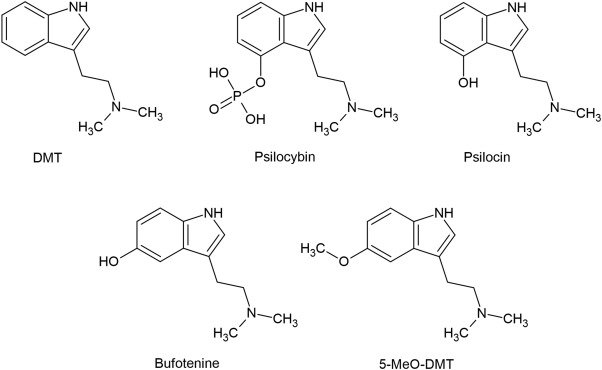
Chemical Structure and Pharmacology
Understanding the molecular differences helps explain why these two compounds produce such distinct experiences:
DMT (C12H16N2):
- Simple tryptamine structure
- Two methyl groups on the amine nitrogen
- No additional functional groups
- Primarily 5-HT2A receptor agonist
- Also affects sigma-1 receptors
5-MeO-DMT (C13H18N2O):
- Tryptamine backbone with a methoxy group at the 5-position
- The methoxy group significantly alters receptor binding
- Higher affinity for 5-HT1A receptors than DMT
- More potent by weight (active at lower milligram doses)
- Different metabolic pathway
The addition of a single methoxy group completely changes the character of the experience. This is a powerful reminder of how subtle chemical modifications can produce dramatically different pharmacological outcomes.
Therapeutic Outlook: A New Frontier in Psychiatry
Emerging research supports the notion that both DMT and 5-MeO-DMT could revolutionize psychiatric treatment. Their ability to rapidly alter perception and emotional processing has sparked interest in:
Trauma Processing:
- Both compounds allow access to repressed memories and emotions
- The brief duration makes them suitable for structured therapeutic sessions
- Ego dissolution can help patients reprocess traumatic events without overwhelming fear
Spiritual Healing:
- Mystical experiences correlate strongly with therapeutic outcomes
- Both compounds reliably produce mystical-type experiences at appropriate doses
- Spiritual insights often translate into lasting behavioral changes
Substance Abuse Treatment:
- Disruption of addictive thought patterns
- Enhanced motivation for change
- Perspective shifts on substance use behaviors
- Reduced cravings reported anecdotally
End-of-Life Anxiety Reduction:
- Both compounds reduce fear of death
- Enhanced acceptance of mortality
- Improved quality of life in terminal patients
- Reconnection with meaning and purpose
However, it is crucial to approach these substances with experienced guidance, proper integration, and a strong understanding of contraindications—especially for those with pre-existing mental health conditions. Unlike psilocybin, which has FDA breakthrough therapy designation and extensive clinical trials, DMT and 5-MeO-DMT research is still in earlier stages.
For those interested in therapeutic psychedelics with more established safety profiles, explore our articles on how magic mushrooms can help with depression e introduction to LSD as a therapeutic treatment.
Dosage Comparison
Understanding relative potency is essential for safety:
| Substance | Threshold | Luz | Common | Strong | Heavy |
|---|---|---|---|---|---|
| DMT (vaporized) | 5–10mg | 10–20mg | 20–40mg | 40–60mg | 60mg+ |
| 5-MeO-DMT (vaporized) | 1–3mg | 3–6mg | 6–12mg | 12–20mg | 20mg+ |
Critical Note: 5-MeO-DMT is significantly more potent by weight. A common dose of 5-MeO-DMT is roughly one-third the weight of a common DMT dose. This makes accurate measurement absolutely essential. Never eyeball doses of either compound.
Estatuto jurídico
Both DMT and 5-MeO-DMT face similar legal restrictions:
United States:
- Both are Schedule I controlled substances federally
- No approved medical use outside research
- Severe penalties for possession, distribution, or manufacture
- Some cities have decriminalized personal possession, but this does not make them legal
International:
- Both are controlled under the 1971 UN Convention on Psychotropic Substances
- Illegal in most countries worldwide
- Traditional ayahuasca use has limited religious protections in some jurisdictions
- 5-MeO-DMT toad venom (“Bufo”) ceremonies operate in legal gray areas in some regions
Research Context:
- Clinical research is permitted with proper DEA licensing
- Several universities are conducting approved studies
- Therapeutic potential is driving policy reform discussions
Choosing Between DMT and 5-MeO-DMT
Neither compound is “better”—they serve different purposes:
Choose DMT if you want:
- A visually stunning, journey-like experience
- Entity encounters and alien landscapes
- Exploration of other dimensions
- A shorter, more intense peak
- Creative and artistic inspiration
Choose 5-MeO-DMT if you want:
- Ego dissolution and unity consciousness
- A mystical, spiritual experience
- Minimal visual distraction
- Profound emotional release
- Deep introspection without narrative complexity
Many experienced psychonauts recommend:
- Starting with DMT to become familiar with the tryptamine headspace
- Approaching 5-MeO-DMT only after significant preparation and experience
- Never mixing the two in the same session
- Allowing ample integration time between experiences with either compound
Perguntas mais frequentes
Is 5-MeO-DMT stronger than DMT?
5-MeO-DMT is more potent by weight—active at roughly one-third the dose of DMT. However, “stronger” is subjective. DMT produces more intense visuals and sensory complexity, while 5-MeO-DMT produces more profound ego dissolution and unity experiences. Many users describe 5-MeO-DMT as “deeper” but less “complex” than DMT.
Can you mix DMT and 5-MeO-DMT?
We strongly advise against mixing DMT and 5-MeO-DMT. The interaction is unpredictable and potentially dangerous. Both compounds are extremely powerful on their own, and combining them increases the risk of overwhelming psychological crisis, respiratory suppression, and traumatic experiences.
How do DMT and 5-MeO-DMT compare to psilocybin mushrooms?
Psilocybin mushrooms produce a longer (4–6 hours), more grounded experience with earthy, organic visuals and emotional depth. DMT is shorter (10–20 minutes vaporized) and more intensely visual with alien, otherworldly character. 5-MeO-DMT is the shortest (20–45 minutes) and most spiritually profound, often lacking visuals entirely. For mushroom-specific information, read our effects of magic mushrooms guide.
Is 5-MeO-DMT more dangerous than DMT?
Both carry significant psychological risks, but 5-MeO-DMT has one specific physical risk that DMT lacks: respiratory suppression at high doses. This makes 5-MeO-DMT slightly more dangerous in unsupervised settings. Both demand respect, preparation, and a capable sitter.
Can either compound treat depression?
Preliminary research and anecdotal reports suggest both may have antidepressant effects, particularly through mystical experiences that shift perspective and reduce rumination. However, neither has FDA approval for depression treatment. Psilocybin is significantly further along in clinical trials. Read our article on how magic mushrooms can help with depression for the most established therapeutic psychedelic option.
How do these compare to 4-AcO-DMT?
4-AcO-DMT is a synthetic prodrug to psilocin, producing effects nearly identical to psilocybin mushrooms (4–6 hours, earthy visuals, introspective). It is far less intense than either DMT or 5-MeO-DMT and is generally considered more manageable for beginners. Read our 4-AcO-DMT guide for details.
What is the safest way to experience these compounds?
The safest approach is to not use them at all. If you choose to proceed, harm reduction essentials include: accurate dosing with a milligram scale, a sober and capable sitter, a safe and comfortable environment, no contraindicated medications, proper mental health screening, and integration support afterward. Read our DMT safety profile for comprehensive harm reduction guidance.
Reflexões finais
While DMT and 5-MeO-DMT share similar origins and therapeutic potential, they provide vastly different experiences. Whether you are drawn to the visual intensity and cosmic journeys of DMT or the ego-dissolving serenity and mystical unity of 5-MeO-DMT, both substances demand profound respect, careful preparation, and responsible use.
DMT offers a window into alien dimensions filled with intelligence and beauty. 5-MeO-DMT offers a return to the source of all existence—a dissolution into pure love and awareness. Both can be transformative. Both can be terrifying. Both deserve their place in the future of mental health treatment and consciousness research—when used responsibly and under safe, supportive conditions.
As research continues and legal frameworks evolve, these compounds may become powerful tools in psychiatry. Until then, education, harm reduction, and respect remain the most important principles for anyone exploring these extraordinary molecules.
Related Reading & Products
If you found this article helpful, explore these related resources from our collection:
- What Is DMT? – A comprehensive introduction to the “spirit molecule”
- Quanto tempo dura a DMT? – Complete timeline across all administration methods
- DMT in Mental Health Treatment – Clinical research and therapeutic applications
- DMT Side Effects – Full breakdown of potential adverse reactions
- DMT Safety Profile – Medical and harm-reduction perspectives
- DMT Drug Interactions – Critical medication combinations to avoid
- DMT and Pre-Existing Health Conditions – Who should never use DMT
- 4-AcO-DMT Guide – The synthetic psilocybin alternative
- Canetas Vape DMT – Controlled, accessible DMT experiences
- DMT Freebase – Pure crystalline N,N-DMT
- LSD Products – For longer, more gradual psychedelic exploration
- Barras de chocolate com cogumelos – Gourmet psilocybin edibles for grounded experiences
- Shop All Products – Browse our full catalog of psychedelics

 Portuguese
  English
  German
  Spanish
  Italian
  Finnish
  Dutch
Dutch  French
  Swedish